Is Upper West Side Safe? Manhattan Livability, Crime & Rent
Upper West Side scores a 7.2 median composite: excellent for transit and practical living, constrained by rising crime and noise realities.
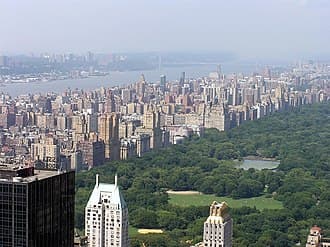
Upper West Side at a glance
- Borough
- Manhattan
- Livability score
- 7.2/10
- Borough rank
- #8 of 33
- Safety verdict
- Safer Than Average
- Crimes (12 mo)
- 6,753
- Subway stations
- 7 (96 St, 86 St, 81 St-Museum of Natural History)
- Active listings
- 596
- Data updated
- 2026-04-05
Is Upper West Side Safe?
Upper West Side, Manhattan scores 7.2/10 for overall livability, ranking #8 of 33 Manhattan neighborhoods. Upper West Side scores a 7.2 median composite: excellent for transit and practical living, constrained by rising crime and noise realities.
This score aggregates live NYPD crime data, 311 safety complaints, shooting incidents, and building health signals within walking distance. Safety varies by block — check a specific Upper West Side address below for a block-level breakdown.
Score Overview
Vertical line = borough median. Scale: 0-10.
Neighborhood Character
You'll walk tree-lined blocks where 123 trees per 200 meters create a canopy density that ranks among the city's densest. The neighborhood strings together five major parks within a 383-meter radius—Riverside Park South, Theodore Roosevelt Park, Lincoln Center Plaza, Damrosch Park, and Joan of Arc Park—giving you genuine green space options without traveling far. Transit access is exceptional: you're within walking distance of seven subway stations (96 St, 86 St, 81 St-Museum of Natural History, 72 St, 59 St-Columbus Circle, 79 St, and 66 St-Lincoln Center), most offering multiple lines including the 1, 2, 3, A, B, C, and D trains. The building stock is predominantly mid-rise (58%) and high-rise (37%) residential, creating an urban but not overwhelming street wall. Note: this is a high-activity neighborhood. You'll hear it—15,426 noise complaints over 12 months reflect the reality of proximity to Lincoln Center, major transit hubs, and consistent foot traffic.
Analysis based on 596 properties scored across 30+ data points

Livability & Restoration
Tree Canopy
123 trees
Avg within 200m | Density: 9.5/10
10 additional trees per block correlates with health benefits equivalent to being 7 years younger (Kardan et al., 2015)
Park Access
Riverside Park South
Avg 383m away | Score: 3/10
Living within 300m of green space associated with 30% fewer antidepressant prescriptions (Taylor et al., 2015)
Acoustic Quality
10/10
Noise proxy score (higher = quieter)
Chronic noise above 55 dB at night associated with 8% cardiovascular mortality increase (Basner et al., 2014)
Street Character
0/10
Enclosure: 0/10
What is the ART Score?
ART stands for Attention Restoration Theory (Kaplan & Kaplan, 1989) — the framework environmental psychologists use to measure whether a place helps your brain recover from mental fatigue, or pushes it deeper into overload. Cities deplete directed attention (the effortful focus you use at work); exposure to restorative environments replenishes it.
We compute an ART score for every block by combining four signals: access to restorative zones (parks, museums, libraries), sensory load (nightlife and tourist density), street vitality (Jane Jacobs’ “eyes on the street”), and third places (Oldenburg’s informal community spaces).
In line with the Manhattan median — typical city stimulus with typical restorative access.
What drives the score
- +Restorative zones. Museums, libraries, community gardens, and parks within walking distance. “Soft fascination” stimuli (clouds, tree branches, water) let directed attention recover without effort — the Kaplans’ core mechanism.
- −Sensory load. Bar and nightclub density (5+ within 150m), firehouse siren corridors, tourist chokepoints, and very high foot traffic push the score down by up to 8 points.
- +Street vitality (Jacobs, 1961). Permitted block parties, farmers markets, and community festivals over the past 12 months — a proxy for “eyes on the street” and the informal surveillance that makes blocks feel safe and maintained.
- +Third places (Oldenburg, 1989). Cafés, public plazas (POPS), community centers — the “anchors of community life” that buffer against social isolation. Loneliness has been linked to 29% higher incident coronary heart disease risk (Valtorta et al., 2016).
Health mechanism. Directed-attention fatigue (DAF) is linked to impaired decision-making, irritability, and elevated cortisol. A meta-analysis of 60+ studies (Ohly et al., 2016) found restorative environment exposure significantly improves attention-task performance (Hedges’ g ≈ 0.32) and reduces negative affect.
Theoretical foundations. Kaplan & Kaplan (1989), The Experience of Nature; Jacobs (1961), The Death and Life of Great American Cities; Oldenburg (1989), The Great Good Place.

Transit & Commute
Subway Stations
Commute Score
9.5/10
Borough median: 8.5/10
Walk Score Proxy
0/10
Based on street geometry analysis

Investment Indicators
Multi-Family Stock
0%
2-4 family buildings
Multi-family owner-occupants build 2.4x wealth vs single-family (Herbert, 2013)

Outdoor & Green Space
Avg Tree Count
123
Within 200m radius
Canopy Density
9.5/10
Normalized canopy coverage
Park Network
- Riverside Park South
- Theodore Roosevelt Park
- Lincoln Center Plaza
- Damrosch Park
- Joan Of Arc Park
Avg distance: 383m

Practical Living
Building Types
Who Upper West Side Is For
Transit-dependent professionals
Commute score of 9.5 (above borough median of 8.5) and seven nearby subway stations with multiple line redundancy make this ideal if your job requires frequent movement across the city.
Parents prioritizing schools and outdoor access
Practical score of 9 (well above borough median of 5.8) and top-rated schools are existing neighborhood assets; parks within 383m average and 123 trees per 200m provide accessible recreation.
Cultural institution workers or frequent attendees
Lincoln Center Plaza, Damrosch Park, and 66 St-Lincoln Center station position you at the neighborhood's cultural heart with minimal commute friction.
Pros & Cons
Strengths
Exceptional transit access
Commute score of 9.5 and seven subway stations within the neighborhood, with lines 1, 2, 3, A, B, C, D all represented.
Dense tree canopy and multiple parks
Average 123 trees per 200m radius with 9.5/10 canopy density; five named parks within 383m average distance.
Strong practical infrastructure
Substantial building stock
596 tracked buildings provide housing stability and rental liquidity in a well-established residential area.
Trade-offs
High noise activity
15,426 noise complaints over 12 months (Very High category); you're near transit hubs, cultural venues, and high foot traffic.
Crime trend is worsening
Total crimes over 12 months: 5,720; trend shows +209.5% change—significantly up from prior period.
Below-average art and livability score
ART/Livability score of 4.8 falls below borough median of 5.5, suggesting fewer independent cultural venues or distinctive neighborhood character relative to other Manhattan areas.
Moderate rodent complaints
827 rodent complaints over 12 months indicate a baseline urban pest management issue typical of dense Manhattan neighborhoods.
Score Any Address in Upper West Side
Get detailed livability scores based on building health, transit access, safety, noise levels, and 15+ NYC data sources.
Search an Address in Upper West SideFrequently Asked Questions about Upper West Side
1Is Upper West Side safe?
By NYPD data, Upper West Side is rated "Safer Than Average" — safer than 62% of Manhattan neighborhoods. 6,753 crime incidents and 3 shooting incidents over the past 12 months. See the safety page for the full breakdown.
2What is the average rent in Upper West Side?
Rents in Upper West Side, Manhattan vary significantly by building and apartment type. Market pricing isn't aggregated for this neighborhood yet; use DwellCheck to research specific addresses for rent-stabilization status, HPD violations, and building-level signals that affect what you'll actually pay.
3How is transit access in Upper West Side?
Upper West Side has a commute score of 9.5/10. 7 subway stations serve the area: 96 St, 86 St, 81 St-Museum of Natural History.
4What are the best streets in Upper West Side?
The best streets depend on your priorities. Use DwellCheck to compare specific addresses across livability, safety, transit, and environmental factors.
5What is Upper West Side known for?
Upper West Side sits in Manhattan and ranks #8 of 33 Manhattan neighborhoods on DwellCheck's livability score (7.2/10). It's served by 7 subway stations (96 St, 86 St, 81 St-Museum of Natural History). Upper West Side scores a 7.2 median composite: excellent for transit and practical living, constrained by rising crime and noise realities.
6What is it like to live in Upper West Side?
Living in Upper West Side, Manhattan weights against six livability dimensions: practical (HPD-violation density), commute (subway proximity), arts/culture (venue density), outdoor (parks + trees), financial (price level), investment (price trend). Upper West Side's composite is 7.2/10. Upper West Side scores a 7.2 median composite: excellent for transit and practical living, constrained by rising crime and noise realities. For the block-by-block view, run any specific Upper West Side address through DwellCheck.
7Can you walk around Upper West Side at night?
Upper West Side is classified as "Safer Than Average" by NYPD CompStat data. Over the past 12 months it recorded 3 shooting incidents and 6,753 total crime incidents. Walking at night carries the same risk profile as anywhere in NYC: stay on commercial corridors with foot traffic, avoid empty side streets after midnight, and prefer subway lines that run 24/7.
8Is Upper West Side dangerous?
By NYPD data, Upper West Side is rated "Safer Than Average" — safer than 62% of Manhattan neighborhoods. 6,753 crime incidents over 12 months. Block-level risk varies; check the address-level safety score for any specific street or building.
9What parts of Upper West Side should I avoid?
NYPD CompStat reports incidents at the precinct level, not block-by-block, so a granular "avoid this street" answer isn't possible from public data alone. The most reliable signal at the block level is DwellCheck's address-level safety score, which weights NYPD incidents within a 250m radius of a specific building. As a general rule across NYC: industrial blocks with no foot traffic are higher-risk than residential blocks; subway-station-adjacent commercial corridors are lowest-risk.
10Is Upper West Side a good place to live?
Upper West Side scores 7.2/10 for overall livability and ranks in the 62th percentile for safety in Manhattan. Upper West Side scores a 7.2 median composite: excellent for transit and practical living, constrained by rising crime and noise realities. Whether it's a good fit depends on what you weight: families, solo renters, and remote workers each prioritize different factors (noise, transit access, parks, building quality).
11What is the average DwellScore in Upper West Side?
The median composite score is 7.2 (interquartile range: 6.8–7.6). Strengths: Commute (9.5) and Practical (9) scores well above borough medians. Weaknesses: ART/Livability (4.8) and Financial/Investment (both 5.0, neutral) pull the composite down.
12How accessible is public transit here?
Commute score is 9.5, the highest of any category tracked. Seven subway stations serve the neighborhood (96 St, 86 St, 81 St, 72 St, 59 St-Columbus Circle, 79 St, 66 St-Lincoln Center) with redundant lines (1, 2, 3, A, B, C, D).
13What are the safety and noise realities?
The neighborhood ranks at the 68th percentile for safety activity in the borough (moderate-to-high activity). Total crimes: 5,720 over 12 months with a worsening trend (+209.5%). Noise complaints are very high at 15,426—expect continuous urban ambient sound.
14Why are Financial and Investment scores set to 5.0?
Price and investment data are not available in NYC Open Data. The 5.0 neutral score reflects data absence, not neighborhood weakness. Consult external pricing databases for property cost and investment analysis.
Related Guides
NYC Building Complaints Lookup
Check any building's HPD, DOB, and 311 complaint history before signing.
30 NYC Apartment Red Flags
What to watch for at the viewing, in the listing, and on the landlord.
How to Check Your NYC Landlord
A 5-step free lookup: ACRIS ownership, HPD violations, DOB complaints, lawsuits.
Is My Apartment Rent-Stabilized?
Request a free DHCR rent history and verify stabilization status in 24-72 hours.